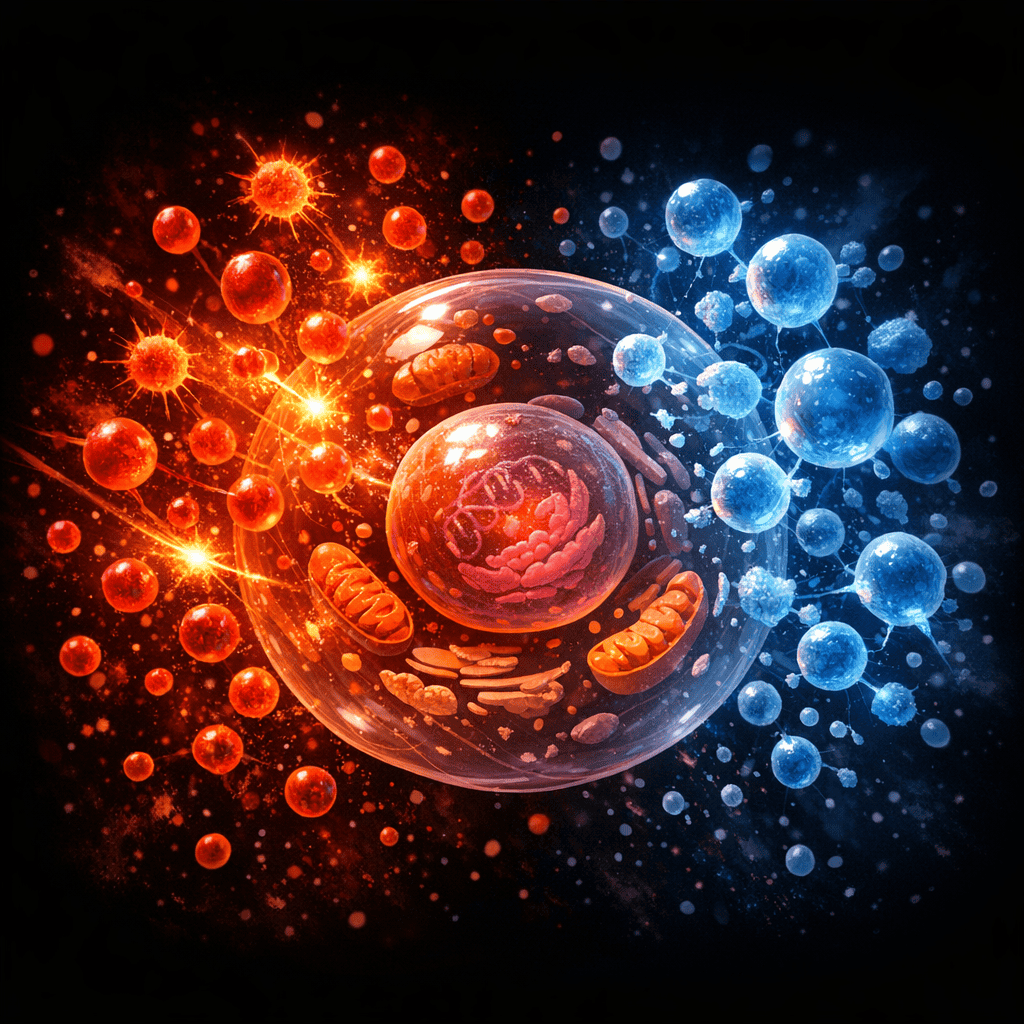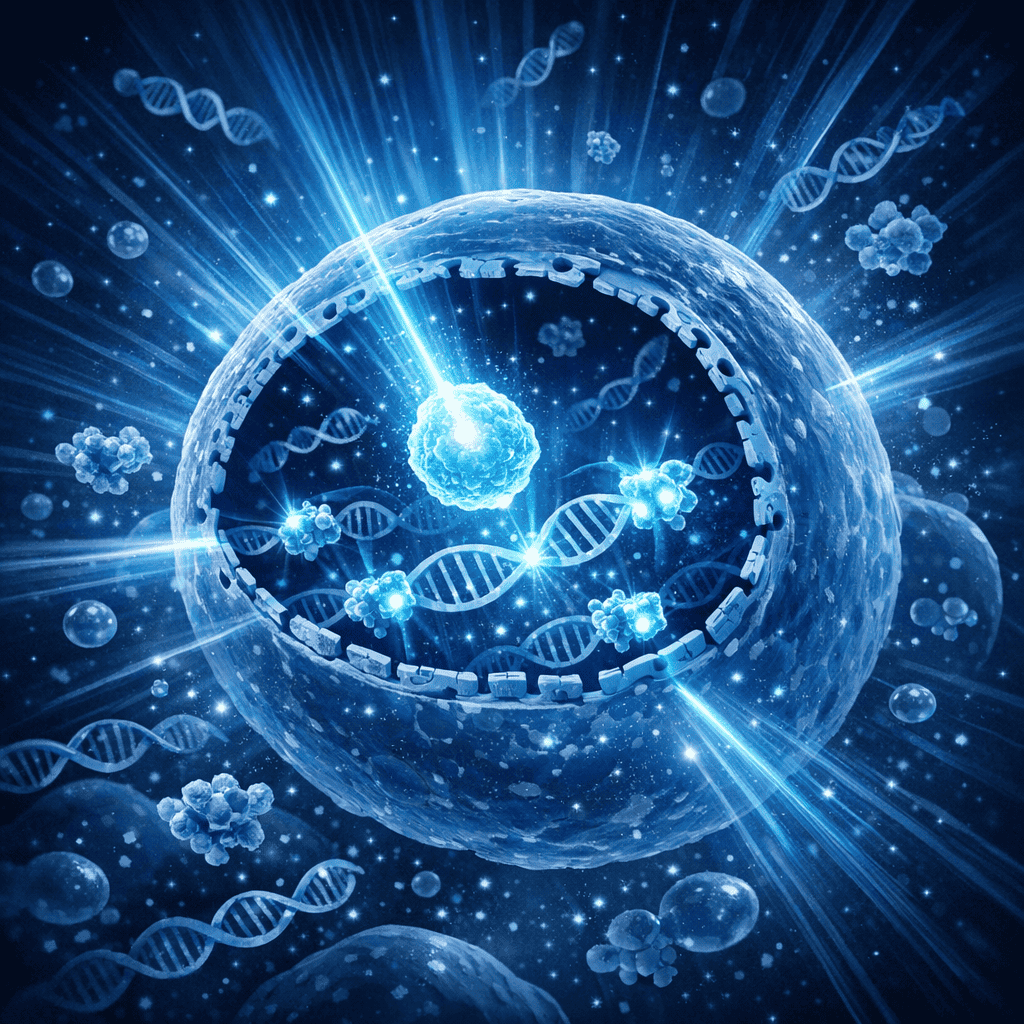

The biology of ageing at a glance
The framework: twelve hallmarks of ageing, set out by leading researchers in 2013 and updated in 2023
The common thread: damage builds up faster than cells can repair it, and the body’s responses gradually become part of the problem
Genes versus life: recent large studies suggest genes explain well under 10 per cent of the variation in human lifespan
Measuring it: epigenetic clocks can estimate a tissue’s biological age from chemical marks on DNA
The frontier: clearing senescent cells and partially reprogramming cells have extended lifespan in mice, but human evidence is at an early stage
Everyone ages, but scientists have only recently begun to agree on what ageing actually is at the level of cells and molecules. For most of the twentieth century it was treated as a slow, inevitable wearing out. Research since the 1990s has shown that the pace of ageing can be changed in laboratory organisms by altering single genes, diets or particular cell types, and that many of the same processes operate in people.
This guide explains the main framework scientists now use to describe ageing, the twelve hallmarks, and walks through the best studied of them: telomeres, senescent cells, inflammation, nutrient sensing and the epigenetic changes behind ageing clocks and cell reprogramming. It also sets out what remains unknown. Every key point is linked to its source.
In this guide: The hallmarks of ageing · Telomeres and the Hayflick limit · Senescent cells · Inflammaging · Nutrient sensing and lifespan genes · Measuring biological age · Reprogramming cells · Genes or lifestyle? · What we still do not know · Common questions · References
The hallmarks of ageing
In 2013, a group of leading ageing researchers led by Carlos López-Otín published a review in Cell that set out nine hallmarks of ageing, the common features of ageing seen across different organisms [1]. It became one of the most cited papers in biology. In 2023 the same team updated the list to twelve [2].
To count as a hallmark, a process has to meet three tests: it must change with age, making it worse in experiments must speed up ageing, and improving it must slow, stop or reverse aspects of ageing [2]. The twelve hallmarks are:
Damage to the cell’s basic machinery: genomic instability (accumulating DNA damage), telomere attrition (shortening of chromosome ends), epigenetic alterations (changes in the chemical marks that control which genes are active), loss of proteostasis (failing protein quality control) and disabled macroautophagy (reduced recycling of worn-out cell parts).
Responses that turn harmful: deregulated nutrient sensing, mitochondrial dysfunction and cellular senescence. In the original framework these began as protective responses to damage that become harmful when they persist or grow too strong [1].
Effects across the whole body: stem cell exhaustion, altered communication between cells, chronic inflammation and dysbiosis, an imbalance in the gut’s microbial community [2].
The authors stress that the hallmarks are interconnected rather than separate causes [2]. Oxidative damage, for example, contributes to several of them, as described in our guide to oxidative stress.
Telomeres and the Hayflick limit
In the early 1960s, Leonard Hayflick showed that normal human cells grown in the laboratory do not divide forever. After a limited number of divisions they stop, a finding published in 1965 in Experimental Cell Research and now known as the Hayflick limit [3].
Part of the explanation lies in telomeres, protective caps of repeated DNA at the ends of chromosomes. Telomeres shorten slightly each time a cell divides, and when they become too short the cell stops dividing. In 1998, a team reported in Science that adding the enzyme telomerase, which rebuilds telomeres, to normal human cells allowed them to keep dividing well beyond their usual limit while still appearing normal, showing that telomere shortening causes this form of cell ageing in the laboratory [4].
There is an important catch. Most cancer cells switch telomerase back on, which is one of the ways they escape the limit on division [1]. Telomere shortening appears to be partly a safeguard against cancer, which is why lengthening telomeres is not a simple anti-ageing strategy.
Senescent cells
When a cell is damaged or its telomeres run short, it can enter a state called senescence. It stops dividing permanently but does not die. Senescent cells release a mix of inflammatory signals and other molecules that can affect neighbouring tissue.
Senescence is not simply bad. It helps prevent damaged cells from becoming cancerous and plays a role in wound healing and embryonic development [5]. The problem is that senescent cells accumulate with age. In a 2016 study in Nature, researchers used a genetic system to remove senescent cells from ordinary middle-aged mice. The treated mice had a longer median lifespan and slower age-related decline in several organs, including the kidney and heart [5].
That finding launched the search for senolytics, drugs that selectively clear senescent cells. The first human study, published in 2019 in EBioMedicine, was an open-label pilot in 14 people with a serious lung disease. Its main aim was to test whether the treatment was feasible; it reported some changes in physical function measures, but it had no control group and was not designed to show benefit [6]. Further trials are under way, and no senolytic is approved to treat ageing.
Inflammaging
As people age, many develop a persistent, low-grade inflammation that is not caused by infection. Researchers call it inflammaging. A 2018 review in Nature Reviews Endocrinology describes how it is sustained by several sources, including cell debris, senescent cells, excess nutrients and signals from gut microbes, and argues that it contributes to many age-related diseases [7].
The same review makes a point that applies across ageing research: chronic diseases are not only a result of ageing but may also speed it up, so the relationship runs in both directions [7].
Nutrient sensing and lifespan genes
One of the founding discoveries of modern ageing research came from a tiny worm. In 1993, Cynthia Kenyon and colleagues reported in Nature that a mutation in a single gene, daf-2, allowed the roundworm C. elegans to live more than twice as long as normal while remaining active and fertile [8]. The gene turned out to be part of an insulin-like signalling pathway that helps cells sense nutrients, a pathway also found in mammals.
Other simple organisms have been equally useful. A 1959 study in Nature showed that individual yeast cells can only produce a limited number of daughter cells before they die [9], and yeast has since become a workhorse for identifying genes and pathways involved in ageing.
Restricting calories without malnutrition extends lifespan in many laboratory species. Two long-running studies in rhesus monkeys initially disagreed about survival. A 2017 joint analysis in Nature Communications concluded that differences in study design explained much of the gap, and that the health benefits of calorie restriction are conserved in monkeys [10]. Whether the same applies to people over a lifetime has not been established.
Measuring biological age
Two people of the same age can differ widely in health, which has driven the search for measures of biological age. The best known are epigenetic clocks, which use patterns of chemical tags, called methylation, on DNA.
In 2013, Steve Horvath published a clock in Genome Biology built from 353 sites on the genome and trained on about 8,000 samples from 51 tissue and cell types. It estimated age across most tissues, gave an age close to zero for embryonic stem cells, and showed that many cancer tissues appear on average decades older than their chronological age [11]. Newer clocks aim to predict health outcomes as well as age.
These clocks are powerful research tools, but they have limits. Different clocks can give different results for the same person, and it is not yet clear how far changes in a clock reading reflect real changes in health.
Reprogramming cells
In 2006, Kazutoshi Takahashi and Shinya Yamanaka showed in Cell that adding just four genes could turn mature mouse cells back into stem cells able to become almost any tissue [12]. The discovery earned Yamanaka a share of the 2012 Nobel Prize. It also showed that the epigenetic marks associated with a cell’s identity and age can be reset.
Full reprogramming erases a cell’s identity, and in the original study the resulting cells formed tumours when transplanted into mice [12]. In 2016, a team at the Salk Institute reported in Cell that briefly and repeatedly switching on the same genes, a process called partial reprogramming, improved several signs of ageing and extended lifespan in a mouse model of premature ageing [13]. The approach has attracted major investment, but it has not been tested as an ageing treatment in people, and safety is a central concern.
Genes or lifestyle?
It is widely believed that long life runs in families. Older estimates put the heritability of lifespan at around 15 to 30 per cent. A 2018 study in Genetics used family trees covering hundreds of millions of people and found that much of that family resemblance was also shared by in-laws, who are not genetically related. After accounting for the tendency of people to marry partners with similar lifestyles and backgrounds, the researchers estimated that the true heritability of lifespan was well below 10 per cent [14].
That does not mean genes are unimportant, particularly for reaching exceptional ages, but it suggests that most of the variation in how long people live comes from factors other than inherited genes.
What we still do not know
Many of the most striking findings in ageing research come from worms, flies, yeast and mice, which live short lives in controlled conditions. Translating them to people, who live for decades in varied environments, is the field’s central challenge.
Researchers also lack agreed measures for whether an intervention slows human ageing as a whole, rather than improving a single marker. Without them, trials have to wait years for outcomes such as disease or death, which is one reason human evidence lags so far behind animal research [2].
Finally, the hallmarks are interconnected, and it is not yet clear which are the most important drivers in people, or whether targeting one can shift the others [1, 2].
Common questions
What are the hallmarks of ageing?
They are twelve interconnected processes that researchers have identified as common features of ageing, ranging from DNA damage and telomere shortening to chronic inflammation and changes in gut microbes [2].
Do telomeres determine how long we live?
Telomere shortening limits how many times cells can divide in the laboratory [3, 4], but it is one factor among many in whole-body ageing, and long telomeres are not simply better because of the link with cancer [1].
What are senescent cells?
They are cells that have permanently stopped dividing but remain active and release inflammatory signals. They help prevent cancer and support wound healing, but they accumulate with age, and removing them extended lifespan in mice [5].
Can ageing be reversed?
Some signs of ageing have been reversed in cells and in mice, for example through partial reprogramming [13]. There is no proven way to reverse ageing in people.
How much of ageing is genetic?
A large 2018 study estimated that inherited genes account for well under 10 per cent of the variation in human lifespan [14].
Further reading: Mitochondria explained: how your cells make energy, and why it matters.
Further reading: Ferroptosis explained: how iron drives a distinct form of cell death.
Further reading: Sleep and cellular repair: what happens inside your cells while you sleep.
Further reading: Redox signalling explained: how cells use reactive oxygen as a message.
Further reading: Inflammation explained · Exercise and your cells
References
- López-Otín C, Blasco MA, Partridge L, et al. (2013). The hallmarks of aging. Cell. https://doi.org/10.1016/j.cell.2013.05.039
- López-Otín C, Blasco MA, Partridge L, et al. (2023). Hallmarks of aging: an expanding universe. Cell. https://doi.org/10.1016/j.cell.2022.11.001
- Hayflick L. (1965). The limited in vitro lifetime of human diploid cell strains. Experimental Cell Research. https://doi.org/10.1016/0014-4827(65)90211-9
- Bodnar AG, Ouellette M, Frolkis M, et al. (1998). Extension of life-span by introduction of telomerase into normal human cells. Science. https://doi.org/10.1126/science.279.5349.349
- Baker DJ, Childs BG, Durik M, et al. (2016). Naturally occurring p16Ink4a-positive cells shorten healthy lifespan. Nature. https://doi.org/10.1038/nature16932
- Justice JN, Nambiar AM, Tchkonia T, et al. (2019). Senolytics in idiopathic pulmonary fibrosis: results from a first-in-human, open-label, pilot study. EBioMedicine. https://doi.org/10.1016/j.ebiom.2018.12.052
- Franceschi C, Garagnani P, Parini P, et al. (2018). Inflammaging: a new immune-metabolic viewpoint for age-related diseases. Nature Reviews Endocrinology. https://doi.org/10.1038/s41574-018-0059-4
- Kenyon C, Chang J, Gensch E, et al. (1993). A C. elegans mutant that lives twice as long as wild type. Nature. https://doi.org/10.1038/366461a0
- Mortimer RK, Johnston JR. (1959). Life span of individual yeast cells. Nature. https://doi.org/10.1038/1831751a0
- Mattison JA, Colman RJ, Beasley TM, et al. (2017). Caloric restriction improves health and survival of rhesus monkeys. Nature Communications. https://doi.org/10.1038/ncomms14063
- Horvath S. (2013). DNA methylation age of human tissues and cell types. Genome Biology. https://doi.org/10.1186/gb-2013-14-10-r115
- Takahashi K, Yamanaka S. (2006). Induction of pluripotent stem cells from mouse embryonic and adult fibroblast cultures by defined factors. Cell. https://doi.org/10.1016/j.cell.2006.07.024
- Ocampo A, Reddy P, Martinez-Redondo P, et al. (2016). In vivo amelioration of age-associated hallmarks by partial reprogramming. Cell. https://doi.org/10.1016/j.cell.2016.11.052
- Ruby JG, Wright KM, Rand KA, et al. (2018). Estimates of the heritability of human longevity are substantially inflated due to assortative mating. Genetics. https://doi.org/10.1534/genetics.118.301613
Redox News Today reports on published research for general interest. This guide is not medical advice. Last reviewed October 2026.

Matt Elliott is the editor of Redox News Today, an independent publication covering peer-reviewed research on cellular health, redox signalling, and related biomedical science.